

eMedia Monitor uncovers ongoing midterm narratives from US broadcast media, delivering real-time data for analysis
eMM’s US footprint across all 210 DMAs, combined with innovation around its AI speech analysis engines, delivers real-time research showing this year’s Senate battlegrounds are being fought on strikingly different local narratives
eMedia Monitor (eMM) today released new findings from its ongoing 2026 midterms monitoring program, drawing on real-time coverage across all 210 U.S. media markets and the company’s AI speech analysis engines. The data confirms that Senate battlegrounds are not being fought on one national story: coverage differs sharply race by race.
No two Senate races are being shaped by the same story, and the differences form at a local level, not a national one. Of the 35 Senate seats up for election this November, eMM’s research focuses on the ten races rated most competitive, tracking real-time coverage across 254 state-market stations alongside 23 national channels. Comparing the leading editorial theme in each race against the leading paid spot shows how rarely the two conversations line up.
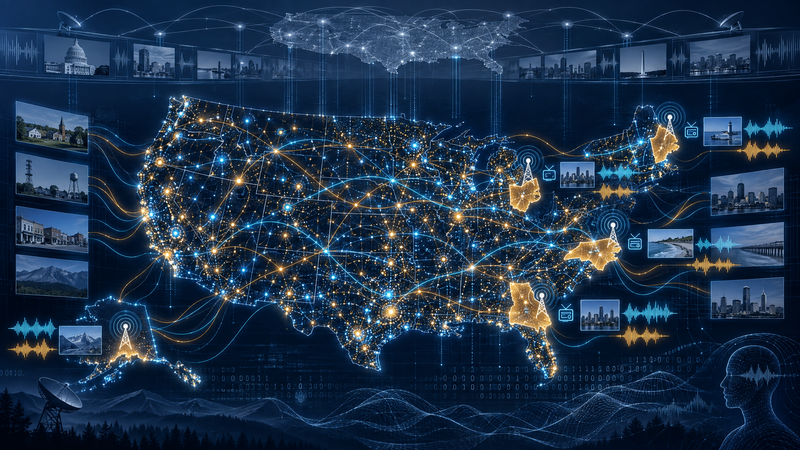
North Carolina: 54% of editorial coverage focused on campaign operations, driven by news coverage fact-checking a disputed ad in the Whatley-Cooper race. The single biggest paid spot in the state was an attack tying Whatley (R) to a hiring scandal, a different story entirely from the one leading the news.
New Hampshire: 52% of editorial coverage focused on polls and horse race coverage, driven by primary night, as Pappas (D) and Sununu (R) both won their nominations. On paid TV, Pappas had the airwaves almost entirely to himself, with Sununu managing just 10 detected airings, yet neither candidate’s paid message is what actually drove the news agenda.
Alaska: 46% of editorial coverage centred on election process stories, driven by a ballot mix-up between two unrelated candidates who both share the name Dan Sullivan. Paid TV tells a simpler story: Peltola (D) is the only candidate with detected ads on air, a message that has nothing to do with the state’s leading news story.
Georgia: the tightest race in the study. Its two leading editorial themes, campaign-trail coverage (35%) and controversy over Mike Collins’ (R) alleged blogger ties (33%), sit just two points apart. Neither matches what is on paid TV, where the largest spots attack Collins over healthcare, Social Security and insurance policy.
Ohio: the next tightest, at eight points. Its leading editorial themes are controversy over an NRSC ad that used real crash footage, which the featured family asked to have pulled (31%), and ongoing campaign-trail and fundraising coverage (23%). Yet the single biggest paid spot in the entire study, a corruption-themed attack tying Husted (R) to the FirstEnergy bribery scandal, run 2,661 times, matches neither.
That local picture, in both its paid and earned forms, looks nothing like the national conversation. On national cable specifically, coverage of these races collapses into the same three-theme mix, campaign operations, candidate controversy and polls, flattening exactly the differences that show up market by market. Across the study as a whole, paid and earned media tell different stories too: paid advertising is dominated by corruption and ethics (25%) and healthcare (22%), while editorial coverage leads with campaign operations (32%) and polls and horse race coverage (18%). The two conversations rarely overlap, and where they do, it is usually because the ad itself became the story.
Recent independent research reinforces why tracking the local narratives around the 2026 midterms matters. According to a March 2026 Edison Research Share of Ear study, AM/FM radio still captures 64% of all ad-supported audio listening among registered voters, more than three times the share held by podcasts, and that share holds steady across the political spectrum: 65% among Republicans, 64% among Democrats and 62% among Independents. Local radio remains one of the most consistent ways voters actually encounter political coverage, which is exactly the layer a national-only monitoring approach misses.
“Every Senate race is telling a different story right now, and most of it is happening outside the national channels,” said Larry Thomas, Vice President, Americas, eMedia Monitor. “Our job is to turn that local coverage into data the moment it airs, so AI platforms and campaign teams can see the real picture, market by market, not just the national headline.”
eMM’s US coverage spans all 210 television markets, capturing local network affiliates, talk radio and independent podcasts alongside national channels, in English and Spanish. Every clip is transcribed, tagged and scored for sentiment in real time, turning raw broadcast and audio content into structured, AI-ready data. That data feeds directly into the large language models and analytics platforms newsrooms, campaigns and brands already use.
That footprint is the product of eMM Americas’ continued build-out of its US network over the past year, growth that has made research at this scale and speed possible.
If you would like to receive the report or further information about eMedia Montor, contact Larry directly on the details below or fill in a form here, including the phrase “midterms” : Request the Report.
eMedia Monitor is a broadcast intelligence platform and global leader in real-time radio, TV, web-TV and podcast monitoring, founded in 2007.
eMedia Monitor offers 24/7 real-time monitoring of audio-visual content across 94 countries in 42 languages across 4,500+ broadcast channels and 130,000+ podcasts.
eMedia Monitor received recognition for outstanding measurement and insight at the DataComms Awards 2026 (Gold for Best Use of Data to Assist Reputation Management) and the AMEC Awards 2025 (Gold for Most Effective Planning, Research and Evaluation).
eMedia Monitor’s broadcast and audio-visual monitoring technology supports media monitoring and media intelligence companies globally, and is used by leading brands, PR and marketing agencies, and government institutions.
Larry Thomas, Vice President, Americas · LinkedIn · larry.thomas@emediamonitor.net · +1 646-290-0453
emediamonitor.net